Have you ever received a message saying STFU and wondered what the other person was trying to tell you?
Maybe you saw it in a group chat, on Snapchat, or in a TikTok comment and felt unsure whether it was a joke or an insult.
STFU is a popular internet slang expression, but its meaning can sound harsh depending on the situation.
Some friends use it playfully when teasing each other, while others use it to express anger or tell someone to stop talking.
Understanding the STFU meaning in text will help you recognize its tone, know when it is appropriate, and respond confidently.
Quick Answer:
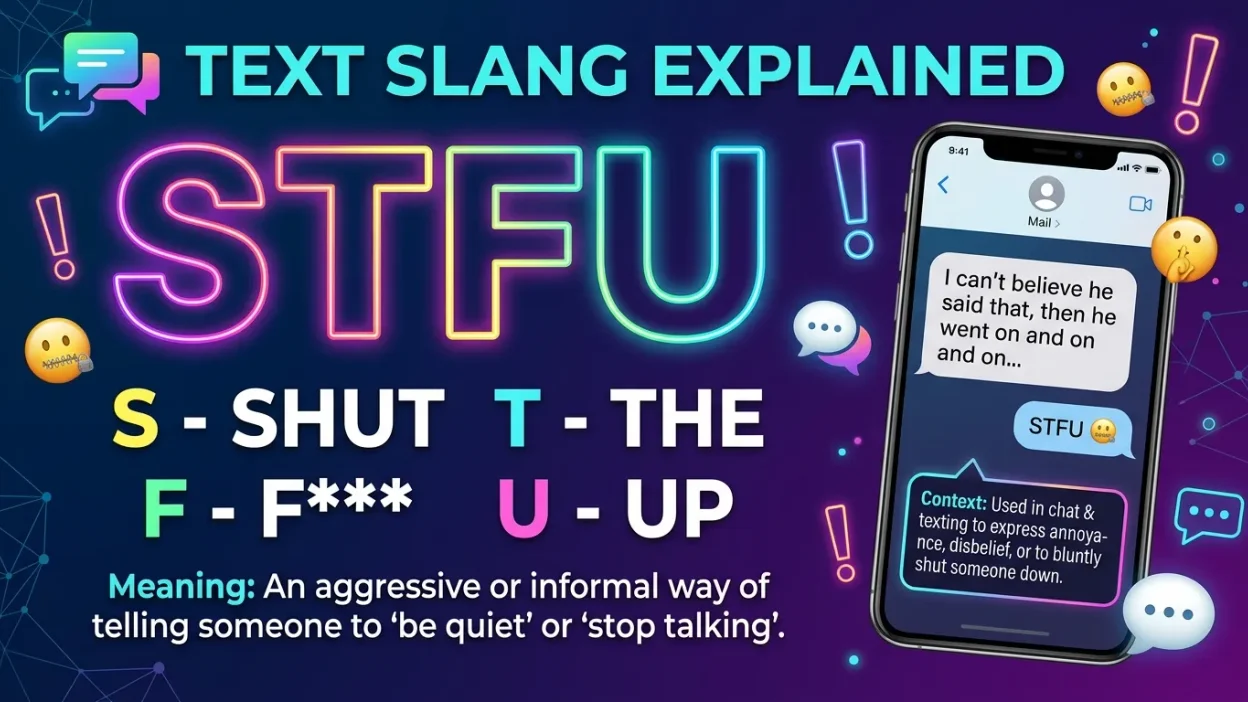
STFU means Shut the F*** Up. It is a vulgar, informal way of telling someone to stop talking or be quiet. Depending on the context, it can sound angry, insulting, joking, or teasing.
What Does STFU Mean in Text?
STFU stands for Shut the F* Up**. It is an internet abbreviation commonly used in text messages, social media comments, online games, and casual digital conversations.
People generally use STFU when they want someone to stop talking, express frustration, react dramatically, or tease a friend. Because it contains a profanity, it can sound aggressive or disrespectful, especially when directed at someone during an argument.
However, STFU does not always indicate genuine anger. Close friends sometimes use it jokingly when someone shares unbelievable news or makes a surprising statement.
For example:
A: i just won $500 in a giveaway 😭
B: STFU!!! NO WAY 😂
In this conversation, the person is probably expressing surprise and disbelief rather than literally telling their friend to stop talking.
Here are the most common meanings and uses of STFU:
- Anger: Telling someone to stop talking in an aggressive way.
- Frustration: Showing irritation during an argument.
- Surprise: Reacting to shocking or unbelievable news.
- Playful teasing: Joking with a close friend.
- Disbelief: Showing that something sounds too surprising to be true.
- Annoyance: Asking someone to stop making unwanted comments.
The meaning depends on the conversation, the relationship between the people involved, and the punctuation or emojis accompanying the message.
In short: STFU = Shut the F* Up = a vulgar way to tell someone to be quiet, express anger, or react with surprise.**
Where Is STFU Commonly Used?
STFU is widely recognized in internet culture and informal digital communication. You may encounter it in several online spaces.
- 📱 Text messages: Friends may use STFU during jokes, disagreements, or surprising conversations.
- 👻 Snapchat: It can appear in private chats, reactions, and conversations between friends.
- 🎵 TikTok: Users sometimes write STFU in comments to express frustration, disbelief, or humorous reactions.
- 📸 Instagram: It may appear in direct messages, comment sections, memes, and reels discussions.
- 🎮 Gaming chats: Players sometimes use STFU during competitive matches, although it can create a hostile atmosphere.
- 💬 Discord and group chats: It may be used jokingly among friends or aggressively during online arguments.
- 😂 Memes and online jokes: People often use STFU as an exaggerated reaction to something surprising or funny.
STFU is considered informal and vulgar, not polite or professional. It is generally unsuitable for workplace emails, school assignments, professional conversations, or situations where respectful communication is important.
Remember that online tone can be difficult to interpret. A friend who writes STFU with laughing emojis may be joking, while someone who sends it during an argument may genuinely be angry.
Examples of STFU in Conversation
Here are seven realistic examples showing how STFU can be used in different texting situations.
1. Reacting to Shocking News
A: my favorite singer just followed me 😭
B: STFU NO WAYYY 😭❤️
Meaning: The person is surprised and probably does not mean the phrase literally.
2. During an Argument
A: you never let anyone finish speaking
B: STFU and listen to me for once
Meaning: The person is angry and using the expression aggressively.
3. Joking With a Close Friend
A: i ate the whole pizza by myself 💀
B: STFU LMAOOO 😂
Meaning: The reply expresses playful disbelief.
4. Reacting to a Compliment
A: your crush said you look cute today 👀
B: STFU ARE YOU SERIOUS 😭💕
Meaning: The person is excited, embarrassed, or surprised.
5. In an Online Game
A: stop blaming everyone else for losing
B: STFU bro, you’re the one throwing
Meaning: The players are arguing, and the language is confrontational.
6. Responding to Annoying Comments
A: nobody asked for your opinion
B: stfu, you’re being annoying
Meaning: The speaker is expressing irritation. This exchange may escalate the disagreement.
7. Reacting to an Unbelievable Story
A: she said yes to the date!!
B: STFU I’M SO HAPPY FOR YOU 😭🥹
Meaning: The phrase communicates excitement and disbelief in a friendly context.
These examples show why context matters. STFU can be a joking reaction among close friends, but it can also be insulting or hostile. Never assume that every use is playful.
When to Use and When Not to Use STFU
Because STFU contains profanity, it is important to consider your audience before using it.
✅ When to Use STFU
- With close friends: Use it only when you understand each other’s humor and know the person will not feel insulted.
- In humorous reactions: It can express exaggerated disbelief when a friend shares surprising news.
- In memes: It may fit a joke or a reaction image intended for an audience comfortable with profanity.
- In informal online conversations: It may appear in casual discussions where strong language is accepted.
- When understanding internet slang: Recognizing STFU helps you interpret comments and messages without misunderstanding their tone.
❌ When Not to Use STFU
- At work: It can sound disrespectful and unprofessional.
- With strangers: They may interpret it as an insult or threat of hostility.
- During serious arguments: It can make a disagreement worse instead of resolving it.
- With teachers or older relatives: It may be considered offensive or disrespectful.
- In formal emails: Use polite, complete sentences instead.
- When setting boundaries: A calm, direct request is often more effective than profanity.
STFU Compared With Polite Alternatives
| Context | Example Phrase | Why It Works |
|---|---|---|
| Friend chat | STFU 😂 no way! | Can express playful disbelief among close friends |
| Casual disagreement | Please stop, I’m trying to explain. | Communicates frustration without profanity |
| Work chat | Let’s allow everyone to finish speaking. | Polite and professional |
| Please let me finish my point before responding. | Clear and respectful | |
| Serious situation | I need a moment of quiet, please. | Sets a calm boundary |
If you are unsure how someone will react, choose a less aggressive expression. You can communicate surprise, annoyance, or a need for quiet without risking unnecessary conflict.
Similar Slang Words or Alternatives
Several expressions have meanings similar to STFU, but their tone and level of politeness differ.
| Slang | Meaning | When to Use |
|---|---|---|
| STFD | Shut the F*** Down | Vulgar expression used in certain informal contexts |
| ZIP IT | Be quiet | Informal, sometimes bossy |
| SHHH | Be quiet or keep the noise down | Playful or gentle requests for quiet |
| HUSH | Be quiet or stop talking | Casual conversations |
| STFU RN | Shut the F*** Up Right Now | A more immediate, forceful version of STFU |
| Be quiet | Stop talking or making noise | General situations, depending on tone |
STFU vs. ZIP IT: STFU is more vulgar and potentially offensive, while ZIP IT is less explicit but can still sound bossy.
STFU vs. SHHH: STFU often communicates anger, frustration, or exaggerated surprise. SHHH usually asks someone to lower their voice or remain quiet.
STFU vs. HUSH: HUSH is generally softer and may be playful, although it can sound dismissive in certain situations.
STFU vs. Be Quiet: Be quiet is a straightforward alternative that avoids profanity. It can still sound rude if delivered harshly, but it is more suitable in many everyday situations.
If you want to express surprise without sounding offensive, try No way!, You’re kidding!, or Are you serious? These alternatives communicate excitement or disbelief without using vulgar language.
FAQs About STFU Meaning in Text
1. What does STFU stand for?
STFU stands for Shut the F*** Up. It is an informal internet abbreviation used to tell someone to stop talking or express strong emotions.
2. Is STFU a bad word?
Yes. STFU contains profanity and is generally considered vulgar. Its impact depends on the audience and context.
3. Does STFU always mean someone is angry?
No. People sometimes use it jokingly to express surprise or disbelief. However, it can be genuinely hostile in an argument.
4. What does STFU mean from a girl?
A girl might use STFU to express anger, joke with a friend, or react to surprising news. The surrounding conversation helps reveal her intention.
5. What does STFU mean from a guy?
A guy might use STFU playfully with friends or aggressively during a disagreement. The abbreviation alone does not reveal his emotional state.
6. What does STFU mean on Snapchat?
On Snapchat, STFU usually means Shut the F*** Up. It can be a joking reaction, an expression of disbelief, or an angry response.
7. What does STFU mean on TikTok?
On TikTok, users commonly use STFU in comments and memes to express frustration, surprise, disbelief, or humorous reactions.
8. Is STFU flirty?
STFU is not inherently flirty. Close friends or romantic partners may use it playfully, but it can also sound insulting. Context is important.
9. How should I respond when someone texts STFU?
If they are joking, you might reply No way, right? 😂 If they seem angry, consider responding calmly with Let’s talk respectfully.
10. What is a polite alternative to STFU?
Try Please be quiet, Let me finish speaking, or Could you give me a moment? These phrases communicate your message without profanity.
Understanding STFU helps you recognize internet slang and interpret messages more accurately. Before using it yourself, consider your relationship with the other person and whether the conversation is playful or serious.

Olivia Bennett is a writer at MeaningNetworks, creating clear, engaging articles about texting slang, internet abbreviations, emojis, and social-media language to help readers understand modern digital communication.