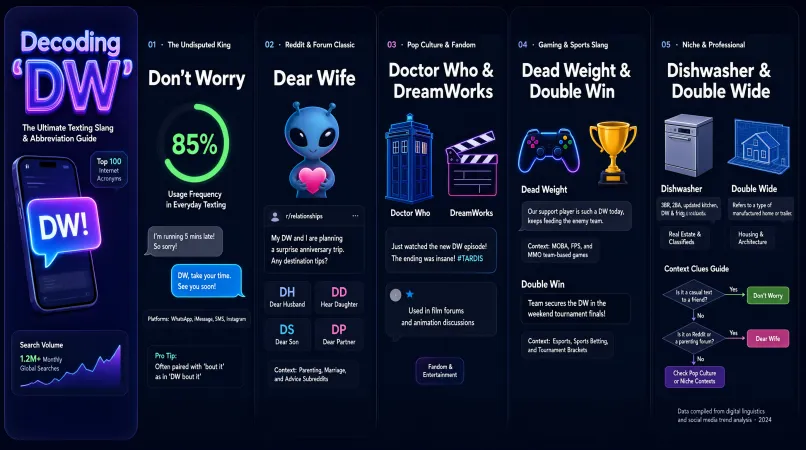
Have you ever received a text that simply says “DW” and wondered what it means? Short texting abbreviations can be confusing, especially when you see one without any explanation. In most text messages and social media conversations, DW means “Don’t Worry.”
People use it as a quick, friendly way to reassure someone, calm them down, or let them know that something is okay. For example, if you apologize for being late, a friend might reply, “DW, it’s fine!” Depending on the conversation,
DW can sound friendly, caring, casual, or sometimes a little dismissive.
That is why the context matters when interpreting it. In this guide, we’ll explain the DW meaning in text, what DW stands for, how to use it, what it means on social media, whether it can be flirty or rude, and how to respond when someone sends you “DW.”
We’ll also include simple real-life texting examples.
Quick Answer: What Does DW Mean in Text?
DW means “Don’t Worry” in text messages and online chats.
It is a casual abbreviation people use to reassure someone or tell them that there is no need to stress.
For example:
Person 1: Sorry I’m late!
Person 2: DW, it’s okay!
Here, DW means “Don’t Worry.”
It can also communicate ideas such as:
- It’s okay.
- No problem.
- Don’t stress.
- Everything is fine.
- You don’t need to worry about it.
What Does DW Stand For?
In texting, DW stands for “Don’t Worry.”
People shorten the phrase to two letters because texting is often quick and informal. Instead of typing:
“Don’t worry about it. Everything is fine.”
someone can simply write:
“DW!”
The meaning is usually easy to understand when the surrounding conversation is clear.
DW is commonly used in:
- Text messages
- Instagram DMs
- Snapchat
- TikTok messages
- Group chats
- Online gaming chats
- Casual social media conversations
Because it is an informal abbreviation, DW is best suited to relaxed communication.
What Does “Don’t Worry” Mean in a Text?
When someone says “Don’t worry,” they are usually trying to reassure you.
Depending on the situation, DW can mean:
“It’s Okay”
If you apologize for something, someone might respond with DW to tell you that they are not upset.
“Sorry I forgot to call.”
“DW, it happens.”
“Don’t Stress”
Someone may use DW when they know you are nervous about something.
“I’m worried about tomorrow’s test.”
“DW, you’ll do great!”
“No Problem”
DW can also tell someone that their mistake or inconvenience is not a big deal.
“Sorry for making you wait.”
“DW!”
“Everything Is Fine”
Sometimes DW is simply a way to let someone know that there is nothing to be concerned about.
How Is DW Used in Texting?
DW can be used in many everyday conversations. Its meaning usually stays close to “Don’t Worry,” but the reason for using it can change.
DW After an Apology
This is one of the most common uses.
A: Sorry I’m late.
B: DW, take your time.
Here, DW means that the person is not upset about the delay.
DW After a Mistake
A: I accidentally sent you the wrong photo.
B: DW, just send the right one.
The sender is reassuring the other person that the mistake is not serious.
DW When Someone Is Nervous
A: I’m really nervous about my interview.
B: DW, you’re going to do fine!
Here, DW is supportive and encouraging.
DW When Someone Thinks They Are Causing Trouble
A: I hope I’m not bothering you.
B: DW, you’re not!
In this context, DW helps reassure the other person.
DW Meaning in Different Contexts
The basic meaning remains “Don’t Worry,” but its emotional tone can vary.
DW Between Friends
Friends commonly use DW to reassure one another.
“Sorry, I can’t come tonight.”
“DW, we’ll hang out another day.”
It sounds casual and friendly.
DW Between Family Members
Family members may use DW when comforting or reassuring each other.
“I’ll be home late.”
“DW, just be safe.”
The abbreviation can feel caring depending on the message.
DW Between Couples
In a romantic conversation, DW can sound supportive or affectionate.
“Sorry I made you wait.”
“DW ❤️.”
However, DW itself does not automatically have a romantic meaning.
DW From a Guy
If a guy sends you “DW,” he is most likely saying “Don’t worry.” He could be responding to an apology, concern, or nervous message.
The context matters if you are wondering whether he is being friendly or romantic.
DW From a Girl
If a girl sends “DW,” the meaning is generally the same. She may simply be reassuring you that everything is okay.
Is DW Friendly, Rude, or Dismissive?
Most of the time, DW is friendly and reassuring. However, the tone can change depending on how it is written.
When DW Sounds Friendly
“DW 😊, everything is fine!”
The extra words and emoji make the message feel warm.
When DW Sounds Caring
“DW, I’ll help you with it.”
Here, the person is actively reassuring you.
When DW Might Sound Dismissive
“DW.”
A one-word response can sometimes feel short or dismissive, especially if the previous conversation was serious.
That does not necessarily mean the person is annoyed. Their normal texting style and the situation should be considered.
Does DW Mean Someone Is Mad?
Not usually.
DW normally means that the person is telling you not to worry. If the response seems cold, look at the entire conversation rather than interpreting the two letters alone.
Is DW Flirty?
DW is not inherently flirty.
It simply means “Don’t Worry.” However, it can appear in a flirty conversation.
For example:
“Sorry I disappeared yesterday.”
“DW 😉.”
The wink emoji and the surrounding conversation may create a playful or romantic tone.
Another example:
“I hope I didn’t make things awkward.”
“DW, you’re cute 😊.”
The second part makes the romantic interest clearer.
So, if you’re wondering whether DW is a flirty text, the answer is: it depends on the context, not the abbreviation itself.
What Does DW Mean on Snapchat?
On Snapchat, DW usually means “Don’t Worry.”
Friends may use it in quick messages when someone apologizes, makes a mistake, or feels nervous.
For example:
“Sorry I forgot to snap you back.”
“DW 😂.”
The platform does not change the basic meaning.
What Does DW Mean on Instagram?
On Instagram, DW is commonly used in DMs and casual conversations.
For example:
“Sorry I didn’t reply earlier.”
“DW, no worries.”
It is simply a shorter way of saying “Don’t Worry.”
What Does DW Mean on WhatsApp?
DW can also appear frequently in WhatsApp conversations.
“Sorry, I’ll be a few minutes late.”
“DW, see you soon.”
Because WhatsApp conversations are often informal, short abbreviations like DW are easy to use.
What Does DW Mean in a Group Chat?
In a group chat, DW can reassure one person or the entire group.
For example:
Alex: Sorry guys, I missed the meeting.
Sam: DW, we’ll catch you up.
Here, Sam is telling Alex not to worry about missing the meeting.
How to Respond to “DW”
Your response depends on the situation.
Simple Response
“Thanks!”
This works in almost any casual conversation.
Friendly Response
“Thanks, I appreciate it!”
This shows that you appreciate the reassurance.
When Someone Is Comforting You
“That makes me feel better. Thanks!”
When You Want to Continue the Conversation
“Thanks! What are you up to?”
This acknowledges their message while keeping the conversation going.
A Casual Response
“Okay, got it 😊”
A Flirty Response
If the conversation is already romantic:
“You’re sweet 😉”
Remember that your response should match the tone of the conversation.
Real Texting Examples of DW
Example 1: After Being Late
A: Sorry I’m late!
B: DW, I just got here.
Example 2: After Forgetting Something
A: I forgot to bring your book.
B: DW, you can bring it tomorrow.
Example 3: When Someone Is Nervous
A: I’m really nervous about the presentation.
B: DW, you’ll do great!
Example 4: Between Friends
A: I can’t make it tonight. Sorry!
B: DW, we can meet tomorrow.
Example 5: Romantic Conversation
A: Sorry if that sounded weird.
B: DW 😊
Example 6: Group Chat
A: Sorry guys, I missed the call.
B: DW, we’ll fill you in.
Example 7: Casual DM
A: Sorry for the late reply.
B: DW! How have you been?
DW vs. Similar Texting Abbreviations
DW can sometimes be confused with other common texting abbreviations.
| Abbreviation | Meaning | Main Idea |
|---|---|---|
| DW | Don’t Worry | Reassurance |
| NP | No Problem | Saying something is okay |
| NVM | Never Mind | Dropping or dismissing a topic |
| IDC | I Don’t Care | Showing lack of concern |
| WYD | What You Doing? | Asking what someone is doing |
DW vs. NP
DW means “Don’t Worry.”
NP means “No Problem.”
They can sometimes be used in similar situations, but they are not exactly the same.
“Sorry I’m late.”
“DW!”
or:
“Thanks for waiting.”
“NP!”
DW vs. NVM
DW reassures someone.
NVM means “Never Mind” and usually tells someone to forget or ignore something.
DW vs. IDC
DW means the person should not worry.
IDC means “I Don’t Care.”
These have very different tones.
DW vs. WYD
WYD means “What You Doing?”
It is a question about someone’s activity, while DW is a reassurance.
Does DW Have Other Meanings?
Yes, abbreviations can have different meanings depending on the community or context.
In ordinary texting, “Don’t Worry” is the main meaning of DW. However, you may occasionally see DW used differently in specific online communities or conversations.
For example, some people may use DW as an abbreviation for terms unrelated to texting slang.
That is why context matters. If someone writes:
“DW, it’s fine.”
it is very likely that they mean “Don’t Worry.”
Is DW Appropriate for Formal Communication?
Generally, no. DW is best for informal communication.
You can comfortably use it with:
- Friends
- Family
- Close acquaintances
- Casual online contacts
- Social media conversations
Avoid it in:
- Professional emails
- Job applications
- Academic assignments
- Business letters
- Official communication
Instead of writing:
“DW, everything is fine.”
in a professional message, write:
“Please don’t worry. Everything is fine.”
This sounds clearer and more professional.
Common Mistakes When Using DW
Assuming DW Is Always Flirty
It usually isn’t. The abbreviation simply means “Don’t Worry.”
Assuming DW Is Always Rude
A short “DW.” can sometimes feel cold, but the abbreviation itself is not rude.
Using DW in Formal Writing
DW is texting slang and should generally be avoided in professional or academic writing.
Confusing DW With Other Abbreviations
Don’t confuse:
- DW = Don’t Worry
- WYD = What You Doing?
- WYA = Where You At?
- NP = No Problem
- NVM = Never Mind
Ignoring Context
The surrounding words, punctuation, emojis, and relationship between the speakers can all affect how DW feels.
Frequently Asked Questions About DW Meaning in Text
What does DW mean in text?
DW usually means “Don’t Worry.” It is a casual texting abbreviation used to reassure someone.
What does DW stand for?
In texting, DW stands for “Don’t Worry.”
Is DW slang?
Yes. DW is an informal texting abbreviation commonly used in casual online conversations.
Is DW rude?
Usually, no. DW is generally friendly and reassuring, although a very short response can sometimes sound dismissive depending on context.
Is DW flirty?
Not by itself. DW can appear in a flirty conversation, but the abbreviation itself simply means “Don’t Worry.”
What does DW mean from a guy?
It usually means “Don’t Worry.” Whether there is a romantic meaning depends on the rest of the conversation.
What does DW mean from a girl?
It generally means “Don’t Worry” and is usually a simple reassurance.
How do you respond to DW?
You can say “Thanks!”, “I appreciate it,” or continue the conversation with something like “Thanks! How are you?”
What does DW mean on Snapchat?
On Snapchat, DW generally means “Don’t Worry.” It is commonly used in casual messages.
What does DW mean on Instagram?
On Instagram DMs, DW usually means “Don’t Worry.”
What is the difference between DW and NP?
DW means “Don’t Worry,” while NP means “No Problem.” Both can reassure someone, but they are used slightly differently.
Can DW sound dismissive?
Yes, depending on the context. A simple “DW.” may feel short, while “DW 😊, you’re fine!” sounds warmer and more reassuring.
Final Thoughts on DW Meaning in Text
So, what does DW mean in text? In most texting and social media conversations, DW means “Don’t Worry.” It is a short, informal way to reassure someone, tell them not to stress, or let them know that something is okay.
The tone can be friendly, caring, casual, or occasionally dismissive depending on the conversation. DW is not automatically flirty or rude, so it is important to consider the surrounding messages before interpreting it.
If someone texts you “DW,” a simple “Thanks!” or “I appreciate it” is usually a perfect response.

Emily Carter is a writer at MeaningNetworks, creating clear, engaging articles about texting slang, internet abbreviations, emojis, and social media language to help readers understand digital communication.